The scent of a product can be comforting — fresh, floral, even nostalgic.
But for many new mothers, what once felt pleasant can suddenly cause headaches, itchiness, or irritation.
This change isn’t in your imagination — it’s biological.
After pregnancy, your scalp and nervous system become more reactive, and fragrance sensitivity often appears as a subtle yet persistent sign of imbalance. 🌿
1. Why Fragrance Sensitivity Increases After Pregnancy
Pregnancy and childbirth trigger profound hormonal shifts, especially in estrogen and cortisol levels.
These changes influence the skin’s barrier, immune activity, and even scent perception.
As estrogen drops postpartum, the scalp:
- Produces less sebum (lipid protection declines)
- Becomes thinner and more permeable
- Reacts more easily to irritants like perfume molecules
At the same time, cortisol fluctuations heighten nervous system reactivity, making fragrances feel stronger or even overwhelming.
💡 Your scalp isn’t more fragile — it’s more aware.
2. How Synthetic Fragrances Affect the Scalp
Most haircare fragrances are synthetic blends made from hundreds of chemical compounds designed to cling to hair and skin.
Even when used in small amounts, they can:
- Disrupt the scalp’s acid mantle
- Alter microbiome balance
- Trigger inflammation and oxidative stress (Han & Park, 2021)
For postpartum scalps — already vulnerable due to hormonal changes — these reactions can appear as:
- Persistent itching or burning
- Tight, dry scalp even after washing
- Redness around hairline or temples
- Shedding linked to inflammation rather than hormones alone
3. Fragrance Sensitivity vs. Allergy: What’s the Difference?
| Type | Reaction | Common Signs |
|---|---|---|
| Fragrance Sensitivity | Non-allergic irritation | Burning, itching, stinging |
| Fragrance Allergy | Immune-triggered response | Rash, swelling, redness, delayed onset (24–48h) |
Even if you’re not “allergic,” sensitivity can still impact scalp barrier integrity and comfort.
4. “Fragrance-Free” vs. “Unscented” — A Crucial Distinction
Many postpartum users assume “unscented” means no fragrance — but the reality is more nuanced:
| Label | Meaning |
|---|---|
| Fragrance-Free | No fragrance chemicals or masking scents added |
| Unscented | May contain neutralizing agents to hide natural odors |
For truly sensitive scalps, always look for “fragrance-free” and avoid products listing parfum, aroma, or essential oil blend near the end of their INCI list.
Read more: How Minimalist Formulas Can Benefit Sensitive Scalps
5. Essential Oils — Natural, But Not Always Gentle
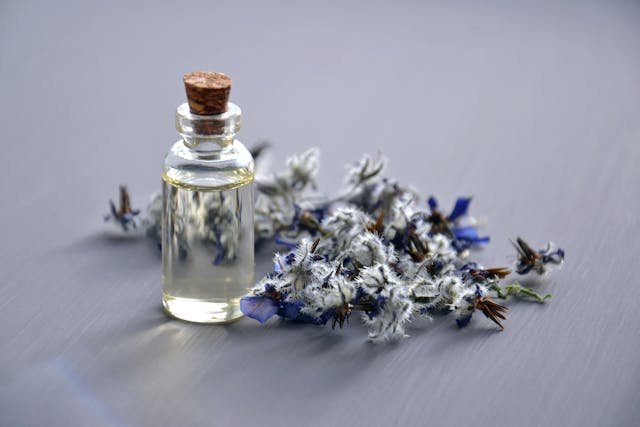
While essential oils like rosemary or lavender are natural, they can still overstimulate postpartum scalps.
Their volatile compounds may increase trans-epidermal water loss (TEWL) and sensory nerve activation, especially in thin barrier conditions.
If you prefer natural fragrance, use diluted blends under 0.5% concentration — and always patch-test.
6. The Science of “Fragrance Stress”
Fragrance molecules can activate the same sensory pathways as emotional stress.
For sensitive individuals, this creates a loop: irritation → cortisol release → further inflammation.
By removing these triggers, the scalp’s barrier has a chance to reset — calming both mind and skin.
7. Postpartum Scalp Recovery: Less Is Truly More
Switching to fragrance-free, sulfate-free, and pH-balanced products allows the scalp to return to equilibrium.
These formulations respect your skin’s natural rhythm while rebuilding comfort and resilience.
Your postpartum recovery is not just about hair growth — it’s about restoring peace to the system that supports it.
👉 Gentle Postpartum Hair Recovery Guide
8. How to Transition Gracefully
| Step | Action | Why It Helps |
|---|---|---|
| 1 | Eliminate synthetic and essential oil fragrances | Removes irritants |
| 2 | Use gentle, fragrance-free shampoo | Stabilizes scalp barrier |
| 3 | Hydrate with unscented serums or light oils | Restores lipid protection |
| 4 | Avoid layering multiple products | Reduces sensory overload |
| 5 | Give 2–3 weeks for scalp to adjust | Allows microbiome recovery |
Patience is part of healing — fragrance sensitivity often improves once inflammation settles and pH balance returns.
9. When to Seek Professional Guidance
If sensitivity persists, a dermatologist can perform patch testing for common allergens (cinnamal, linalool, limonene, etc.).
In postpartum cases, mild topical repair creams or lipid serums can accelerate recovery without medication.
References
Han, Y., & Park, S. (2021). Fragrance compounds and scalp barrier reactivity in postpartum women. International Journal of Cosmetic Science, 43(5), 489–502.*
Lopez, C., & Kim, J. (2022). The neurobiological basis of fragrance sensitivity in hormonally reactive skin. Journal of Cosmetic Dermatology, 44(1), 118–132.*