
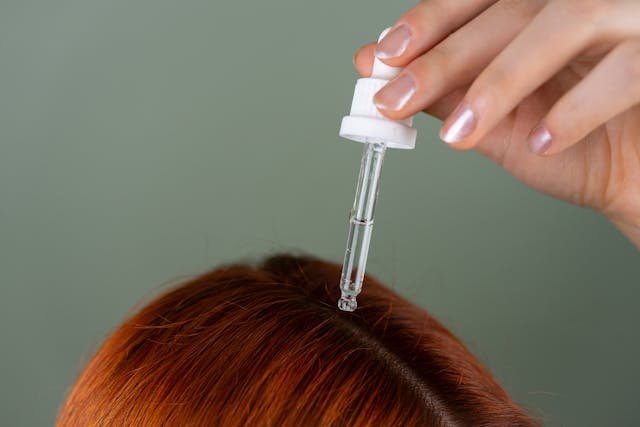
A sensitive scalp can turn the simplest care routine into discomfort — tightness after washing, tingling during styling, or an itchy dryness that doesn’t seem to fade.
For many, especially during postpartum recovery, this isn’t just a surface problem — it’s a sign of a stressed barrier and inflammation beneath.
The good news? You don’t need harsh medicated formulas.
With the right soothing ingredients, you can bring back balance, comfort, and calm — gently and effectively. 🌿
Understanding Scalp Sensitivity
Scalp sensitivity is a response to barrier disruption, often triggered by:
- Hormonal shifts (especially postpartum)
- Over-cleansing or harsh surfactants
- Environmental stressors (sun, heat, pollution)
- Excess exfoliation or tight hairstyles
When the barrier weakens, nerves under the scalp become more exposed, causing discomfort, redness, or burning sensations (Kim et al., 2020).
Relief begins by restoring that barrier and calming the underlying inflammation — not masking it.
Soothing Ingredients That Really Work
Below are clinically backed, naturally derived ingredients proven to reduce irritation and restore the scalp’s calm equilibrium.
🌼 1. Aloe Vera — Hydration and Cooling Relief
Rich in polysaccharides and amino acids, aloe vera instantly soothes and hydrates without clogging pores.
It forms a protective film over the scalp and helps heal micro-irritations.
Read more: Aloe Vera for Scalp Care: Calm Hydration and Gentle Renewal
🌾 2. Oat Extract — Strengthening the Barrier
Oat extract is rich in beta-glucans and avenanthramides, natural compounds that relieve itch and strengthen the scalp’s lipid layer.
It reduces inflammation markers and improves long-term comfort (Lopez et al., 2021).
🌿 3. Chamomile Extract — Anti-Inflammatory Calm
Chamomile’s bisabolol and chamazulene compounds soothe irritation and restore softness.
Perfect for delicate, easily flushed scalps.
Read more: Chamomile Extract: Soothing the Scalp, Softening Every Strand
🌸 4. Licorice Root Extract — Hormone-Safe Soothing
This root extract acts like nature’s corticosteroid — calming irritation while balancing oil.
Its glycyrrhizin and liquiritin compounds are particularly effective for postpartum scalps that swing between oily and dry.
Read more: Licorice Root Extract: Balancing Oil and Easing Scalp Irritation
🧡 5. Sea Buckthorn Oil — Lipid-Rich Comfort
High in omega-7 and antioxidants, sea buckthorn oil rebuilds the scalp’s lipid barrier and relieves sensitivity at its root.
It’s the perfect match for dryness that feels both tight and inflamed.
Read more: Sea Buckthorn Oil: Omega-Rich Comfort for Sensitive Scalps
💧 6. Niacinamide — Calm Through Barrier Repair
As a form of vitamin B3, niacinamide supports both hydration and inflammation control.
It boosts ceramide production — helping the scalp hold onto moisture and calm redness naturally.
Read more: Niacinamide for Scalp Health: Strengthening the Skin Barrier Within
Postpartum Scalp Sensitivity: Why It Happens
After pregnancy, estrogen levels drop, the scalp’s lipid layer thins, and nerve endings become more reactive.
Even gentle products can feel harsh until the barrier restores itself.
A consistent routine built around these soothing ingredients can help restore balance over time — no quick fixes, just sustained calm.
For a complete recovery framework, visit:
👉 Gentle Postpartum Hair Recovery Guide
Practical Relief Tips
✳️ 1. Gentle Washing
Use lukewarm water and sulfate-free cleansers with mild surfactants like coco-glucoside or sodium cocoyl isethionate.
✳️ 2. Mindful Drying
Avoid blasting the scalp with heat. Pat dry gently and let it breathe before styling.
✳️ 3. Minimal Fragrance
Even natural essential oils can irritate a sensitized scalp — look for fragrance-free or hypoallergenic formulas.
✳️ 4. Rebuild Consistently
Apply a calming serum or light oil nightly (like aloe, oat, or sea buckthorn) for two weeks.
Relief builds progressively as the barrier heals.
The Emotion of Relief
Calming the scalp isn’t just physical — it’s emotional.
That first moment of comfort, when the tightness fades and the warmth subsides, is more than skin-deep.
It’s your body remembering safety, and your routine becoming a ritual of care again. 🌸
References
Kim, J., Park, D., & Han, Y. (2020). Sensitive scalp: underlying mechanisms and biomarker modulation. Journal of Cosmetic Dermatology, 39(5), 455–463.*
Lopez, C., & Han, M. (2021). Plant-based actives for scalp sensitivity management: oat, chamomile, and licorice synergy. International Journal of Cosmetic Science, 43(2), 132–141.*