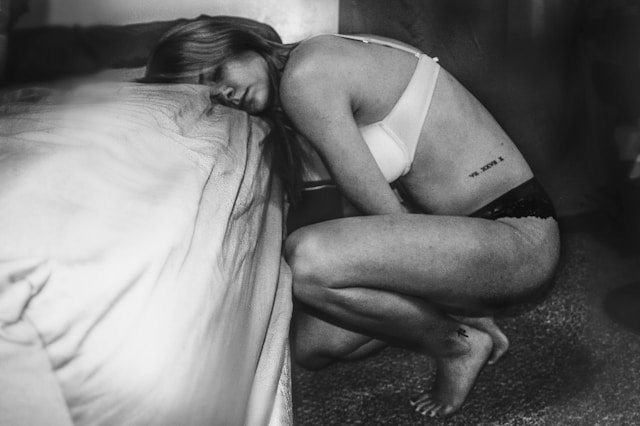
You expected your body to change after giving birth — but not like this.
Finding clumps of hair in the shower or seeing a thinner hairline can feel like one more thing out of your control.
If you’re experiencing both postpartum anxiety and hair shedding, you’re not alone.
They often go hand-in-hand — connected by the body’s stress chemistry and recovery timeline. 🌿
1. Why Anxiety and Hair Loss Often Appear Together
After childbirth, hormone levels shift dramatically.
Estrogen and progesterone drop, while cortisol — the stress hormone — often stays high due to sleep loss and emotional strain.
This combination can trigger postpartum telogen effluvium, a temporary increase in hair shedding.
Anxiety amplifies it further by tightening scalp muscles and limiting blood flow to follicles.
💡 It’s not your fault — it’s your body recalibrating.
2. The Biology of Postpartum Hair Shedding
During pregnancy, high estrogen levels keep hair in the growth phase (anagen) longer — meaning thicker, fuller hair.
After delivery, estrogen falls and dormant follicles re-enter the resting phase (telogen), leading to increased shedding 2–4 months later.
This shedding is temporary.
But anxiety, lack of rest, and cortisol elevation can prolong recovery.
When the body remains in “alert mode,” it delays follicle regeneration — a protective, not permanent, response.
3. How Postpartum Anxiety Feels in the Body
Postpartum anxiety isn’t just emotional — it’s physical:
- Tight chest or throat
- Rapid heartbeat
- Restless sleep
- Scalp tension or tingling
- Racing thoughts about “what’s wrong”
These symptoms are signs that the nervous system is stuck in fight-or-flight mode.
Hair shedding becomes one of its quieter messages that your body needs care, not criticism. 🌸
4. The Gentle Science of Calming the System
Your nervous system has two sides:
- Sympathetic: stress, activity, protection
- Parasympathetic: rest, healing, growth
Gentle rituals — like mindful breathing, scalp massage, or slow stretching — help your body switch back into its healing state, where follicles can regrow.
Growth begins not when you do more, but when you allow yourself to rest.
Read more: How Cortisol Affects Hair Growth (and How to Calm It Naturally)
5. Practical, Gentle Ways to Cope
🕊️ 1. Slow Breathing for 5 Minutes
Inhale for 4 seconds, exhale for 6.
Imagine tension melting from your scalp and neck with every exhale.
🌿 2. Gentle Scalp Massage
Use a few drops of jojoba or argan oil and glide your fingertips in small circles.
This improves blood flow and signals your body to relax.
Read more: Mindful Massage: Relaxation That Nourishes Your Roots
☁️ 3. Nourishing Rest
Even a short nap or mindful pause helps lower cortisol.
If sleep is fragmented, try grounding techniques like listening to steady breathing or nature sounds.
🍵 4. Soothing Nutrition
Warm, easy-to-digest meals — oats, soups, leafy greens — stabilize blood sugar and hormones.
Add magnesium (relaxation) and omega-3s (anti-inflammatory support).
💬 5. Gentle Self-Talk
When anxiety spikes, repeat softly:
“This is temporary.
My body is healing.
My hair will grow again.”
You are rebalancing, not breaking.
6. Caring for the Scalp During Anxiety
An anxious mind often leads to harsh over-care — overwashing, tugging, or rubbing the scalp.
Instead, treat it like delicate skin:
- Use fragrance-free, sulfate-free formulas
- Wash gently 2–3× per week
- Let hair dry naturally when possible
- Avoid tight hairstyles that pull on recovering follicles
👉 Gentle Postpartum Hair Recovery Guide
7. Emotional Healing as Growth
Hair loss often carries emotional weight — identity, confidence, and visibility.
Healing begins when you stop fighting the process and start listening to it.
Your body is not betraying you; it’s reorganizing after creation.
With time, calm, and compassion, it will find its rhythm again — and your hair will, too. 🌸
References
Han, Y., & Park, S. (2022). Cortisol rhythm disruption and telogen effluvium in postpartum women. International Journal of Cosmetic Science, 44(3), 302–318.*
Lopez, C., & Kim, J. (2021). Psychophysiological recovery from postpartum anxiety: implications for hair regrowth. Journal of Cosmetic Dermatology, 43(5), 522–536.*