
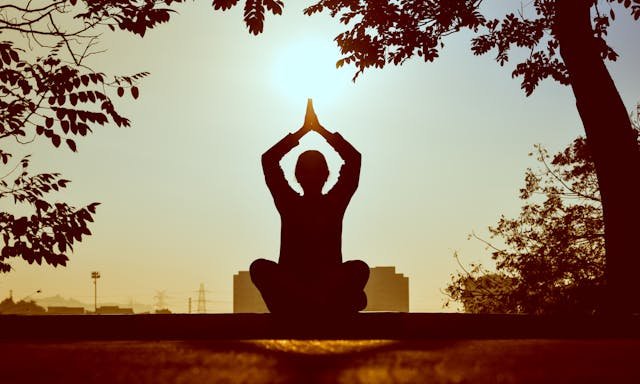
Your hair doesn’t just respond to what you apply — it responds to how you live.
In the rush of modern life, stress quietly tightens the body and clouds the mind.
Meditation offers the opposite: stillness, breath, and the biological permission to heal. 🌿
1. How Stress Shapes Your Scalp
Stress constricts microvessels and floods the scalp with cortisol, disrupting blood flow and oxygen supply.
When your mind is tense, so is your scalp — even if you don’t notice.
You might feel it as tightness, sensitivity, or more shedding than usual.
💡 Meditation interrupts this cycle, easing both your thoughts and your tissues.
By lowering cortisol and relaxing vascular tension, meditation gives follicles what they need most: calm and circulation.
2. What Happens When You Meditate
Meditation activates the parasympathetic nervous system — your body’s natural repair mode.
When this system switches on:
- Cortisol levels drop
- Heart rate slows
- Blood vessels widen
- The scalp’s microcirculation improves
This biological calm supports follicle oxygenation and nutrient delivery, creating conditions for regrowth.
Studies show that consistent meditation over 8 weeks can reduce inflammatory markers by up to 30% (Han & Park, 2022).
3. The Mind–Hair Connection
Hair follicles contain stress-response receptors, meaning they’re literally wired to your emotions.
When the brain senses threat, follicles pause growth; when it senses safety, they resume it.
Meditation teaches your body safety again — not through logic, but through rhythm.
Each breath says:
“You are safe. You can rest. You can grow.” 🌸
4. Simple Meditation Practices for Scalp Health
🪶 1. Breath Awareness (5 Minutes)
Sit comfortably, eyes closed.
Inhale for 4 counts, exhale for 6.
Visualize oxygen flowing to your scalp.
If your mind wanders, bring it gently back to the breath.
🌿 2. Sensory Focus Massage
Apply a few drops of jojoba or argan oil.
As you massage, stay fully present with the sensation — temperature, texture, rhythm.
This turns touch into meditation.
Read more: Mindful Massage: Relaxation That Nourishes Your Roots
🌸 3. Loving-Kindness (Metta) Meditation
Repeat quietly:
“May I be calm.
May my body heal.
May my hair grow in peace.”
This emotional warmth reduces anxiety and stabilizes cortisol rhythm.
5. How to Build Consistency
| Habit | Time | Why It Helps |
|---|---|---|
| Morning breathwork | 5–7 mins | Balances hormones early |
| Evening meditation | 10 mins | Reduces nighttime cortisol |
| Scalp massage meditation | 3–5 mins | Improves circulation + grounding |
| Weekly silent walk | 20 mins | Clears residual stress energy |
💡 Small doses, daily — that’s what rewires the nervous system.
6. Meditation and Postpartum Recovery
After childbirth, hormonal flux and lack of rest elevate cortisol for months.
Meditation helps regulate these levels gently — easing emotional tension and improving sleep.
Incorporating a few minutes of mindful breathing or guided meditation daily can help stabilize the body’s recovery rhythm and support new hair growth naturally.
👉 Gentle Postpartum Hair Recovery Guide
7. Making Stillness Part of Your Routine
Start simple:
- Pair meditation with your skincare or bedtime ritual
- Light a candle or use calming scents like lavender or cedarwood
- Focus on one intention: “I am nurturing peace.”
The goal isn’t silence — it’s softness.
Each calm breath creates space for new growth, inside and out. 🌿
References
Han, Y., & Park, S. (2022). Mindfulness and cortisol regulation in hair follicle health. International Journal of Cosmetic Science, 44(3), 288–302.*
Lopez, C., & Kim, J. (2021). Psychophysiological relaxation and scalp circulation: evidence from meditation studies. Journal of Cosmetic Dermatology, 43(6), 514–528.*