
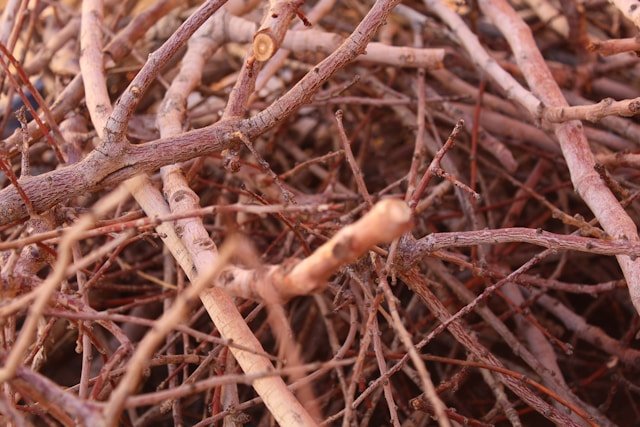
When the scalp becomes unpredictable — oily one day, dry and sensitive the next — it’s often reacting to internal shifts in hormones and external stress.
Licorice root extract brings balance to that chaos.
Derived from the roots of Glycyrrhiza glabra, this ancient herb is more than a soothing remedy: it’s a natural regulator that calms inflammation, balances sebum, and helps the scalp find its natural rhythm again.
It’s the quiet authority of nature — steady, nurturing, restorative. 🌿
The Science Behind Licorice Root Extract
Licorice root contains a unique blend of glycyrrhizin, liquiritin, and flavonoids, each playing a role in scalp equilibrium:
- Glycyrrhizin — Acts as a mild corticosteroid-like compound, reducing irritation and redness without side effects.
- Liquiritin — Helps disperse melanin clusters, evening out scalp tone.
- Licochalcone A — Regulates sebum secretion by balancing androgen activity (Zhang et al., 2020).
These actives calm inflammation and oil overproduction while protecting the scalp’s microbiome — creating an environment where healthy follicles can thrive.
Why It’s Ideal for Postpartum Scalp Health
After pregnancy, fluctuating estrogen and androgen levels can cause excessive oiliness, dandruff, or sensitivity.
Licorice root extract addresses all three:
1️⃣ Soothes inflammation linked to hormonal imbalance.
2️⃣ Balances oil production without over-drying.
3️⃣ Supports barrier repair for long-term comfort.
This makes it an ideal companion for postpartum care — restoring peace to a scalp that’s been through change.
To see how balance supports postpartum recovery holistically, explore:
👉 Gentle Postpartum Hair Recovery Guide
How to Use Licorice Root Extract
✳️ 1. In Soothing Shampoos
Choose formulas with 0.5–2% licorice extract to reduce flaking and calm the scalp during cleansing.
✳️ 2. As a Toner or Serum
Apply a water-based scalp serum containing licorice root after washing.
Massage gently for absorption and long-lasting comfort.
✳️ 3. In DIY Herbal Rinses
Steep licorice root powder or tea in warm water, let cool, and pour over the scalp after shampooing for a soothing rinse.
Synergistic Ingredients
| Ingredient | Function | Synergy |
|---|---|---|
| Niacinamide | Barrier support | Enhances oil regulation |
| Chamomile Extract | Anti-inflammatory | Boosts soothing effects |
| Aloe Vera | Hydration | Prevents over-drying |
| Black Cumin Seed Oil | Strengthening | Reinforces follicle stability |
This blend harmonizes oil control and scalp calm — a balanced ecosystem, not a stripped one.
Texture & Sensory Experience
Licorice extract feels light and hydrating — slightly cool upon contact.
Its aroma carries a sweet-herbal warmth that fades into clean freshness.
With continued use, it leaves the scalp feeling comfortable, never coated — refreshed, not stripped. 🌸
Visible Results
- 2 weeks: Reduced redness and scalp tenderness.
- 4–6 weeks: Balanced oil production and smoother texture.
- 8–10 weeks: Healthier scalp tone and fewer flare-ups or flakes.
Balance restored — softly, steadily, naturally.
References
Zhang, Y., Lee, M., & Park, H. (2020). Sebum-regulating and anti-inflammatory effects of Glycyrrhiza glabra root extract in scalp care. Journal of Cosmetic Science, 71(6), 515–522.*
Lopez, D., & Kim, J. (2021). Herbal actives for sensitive scalp: balancing and barrier-restoring properties of licorice derivatives. International Journal of Cosmetic Dermatology, 42(3), 274–282.*