
When hair feels fragile, dry, or stretched from postpartum changes, what it truly needs isn’t just moisture — it’s structure.
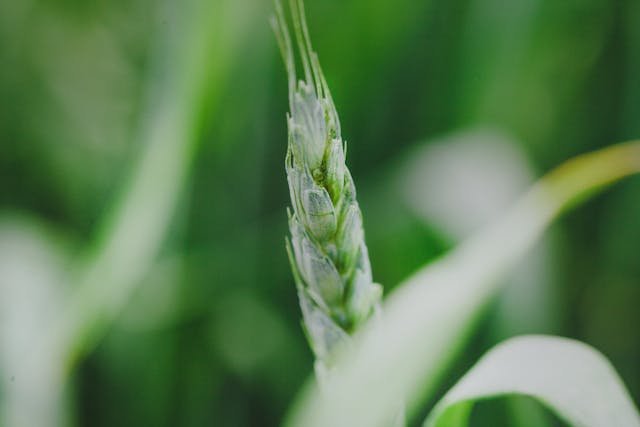
Hydrolyzed wheat protein, a plant-derived strengthening active, helps rebuild that structure gently from within.
Unlike heavy silicones that mask weakness, hydrolyzed wheat protein fortifies the hair’s natural resilience — filling microscopic gaps, restoring elasticity, and giving strands that subtle, flexible strength you can feel.
The Science Behind Hydrolyzed Proteins
Proteins make up nearly 90% of the hair shaft, with keratin as the main component.
When heat, styling, or hormonal changes damage those bonds, hair loses its ability to hold moisture and bounce back.
Hydrolyzed wheat protein is made by breaking down wheat-derived amino acids into tiny fragments small enough to penetrate the cuticle.
Once inside, they bind to the inner cortex, forming a thin film that improves tensile strength and reduces breakage (Wang et al., 2018).
In essence: hydrolyzed wheat protein patches weak spots — not by coating, but by bonding.
Why It Matters for Postpartum Hair
After childbirth, fluctuating estrogen and nutrient depletion can lead to brittle, elastic hair that stretches and snaps easily.
Hydrolyzed wheat protein helps reverse that trend by:
1️⃣ Improving Elasticity — Hair bends, not breaks.
2️⃣ Increasing Hydration Retention — Strengthened fibers hold moisture better.
3️⃣ Restoring Shine and Smoothness — The surface becomes more reflective and aligned.
If your hair feels thinner or more delicate postpartum, strengthening ingredients like this help rebuild confidence — strand by strand.
For a complete approach, you can explore gentle, protein-balancing postpartum routines here:
👉 Gentle Postpartum Hair Recovery Guide
How to Use Hydrolyzed Wheat Protein
✳️ 1. Weekly Treatment Mask
Use a restorative mask or conditioner with 1–2% hydrolyzed wheat protein.
Leave on for 5–10 minutes, then rinse with cool water to seal the cuticle.
✳️ 2. Leave-In Spray
Fine hair benefits most from lightweight sprays that deliver protein without buildup.
Use 2–3 times a week for lasting manageability.
✳️ 3. Shampoo with Balanced Formulation
Look for gentle cleansers that combine protein with plant oils or panthenol — preventing over-strengthening or dryness.
Protein–Moisture Balance: The Key
Too much protein can make hair stiff; too little leaves it limp.
Balance it by alternating between strengthening and moisturizing days.
| Day | Focus | Example Ingredient |
|---|---|---|
| Mon | Strength | Hydrolyzed wheat protein |
| Wed | Hydration | Aloe vera or babassu oil |
| Fri | Repair | Biotin + peptides |
| Sun | Rest | Gentle cleansing only |
This gentle rhythm rebuilds hair integrity without stress or overload.
Synergy with Other Nutrients
| Ingredient | Function | Synergy |
|---|---|---|
| Panthenol (B5) | Hydration and flexibility | Prevents brittleness |
| Biotin | Keratin formation | Boosts long-term strength |
| Amino Acids (Serine, Arginine) | Fiber repair | Complements protein bonding |
| Collagen Peptides | Elasticity | Reinforces inner structure |
Together, they act like nutrition and exercise for the hair fiber — rebuilding from root to tip.
What to Expect
- 2 weeks: Hair feels smoother and easier to detangle.
- 4–6 weeks: Reduced breakage, better moisture retention.
- 8–10 weeks: Noticeable strength, softness, and bounce.
It’s not a transformation overnight — it’s recovery built slowly, naturally, and with intention. 🌾
References
Wang, Y., Lee, C., & Kim, J. (2018). Penetration behavior of hydrolyzed wheat proteins in human hair. Journal of Cosmetic Science, 69(2), 95–104.*
Lopez, D., & Kim, S. (2021). Comparative study of plant proteins for strengthening damaged hair. International Journal of Trichology, 13(1), 44–52.*