
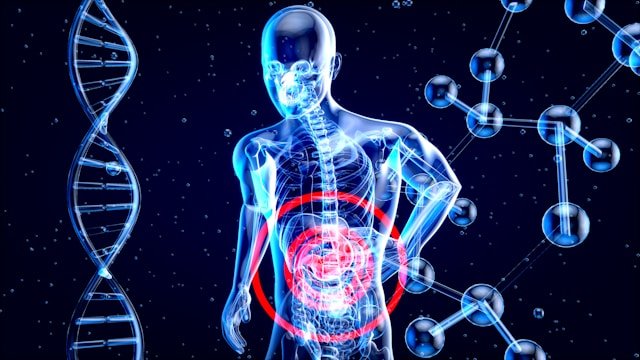
Healthy hair starts deeper than your scalp — it starts in your gut.
Inside your digestive system lives an intricate community of bacteria, fungi, and immune cells that affect every part of your body, including your skin and scalp.
When this internal ecosystem (the gut microbiome) falls out of balance, it can spark inflammation that travels through the bloodstream — quietly affecting hair follicles and scalp comfort.
Your gut and your scalp are more connected than you think. 🌿
1. The Gut–Scalp Axis: A Two-Way Conversation
Scientists call it the gut–skin axis — the communication network between your intestinal microbiome and your skin’s immune system.
This same connection extends to the scalp, where inflammation or imbalance inside can manifest as irritation or shedding on the surface.
How it works:
- Gut microbes regulate immune activity and inflammatory signals
- Nutrient absorption in the gut feeds scalp cells and follicles
- Dysbiosis (microbial imbalance) increases inflammatory molecules like IL-6 and TNF-α (Han & Park, 2022)
- These molecules circulate in the bloodstream, reaching hair follicles and slowing growth
When your gut flora thrives, your scalp stays calmer, better nourished, and more resilient.
2. Signs Your Gut May Be Affecting Your Scalp
Because inflammation travels systemically, gut imbalance can show up in subtle ways:
- Chronic scalp sensitivity or redness
- Sudden increase in shedding
- Itchy or oily scalp without clear external cause
- Breakouts along the hairline or temples
- Worsening of seborrheic dermatitis or eczema
💡 When your scalp feels inflamed even with gentle care, it may be time to look inward.
3. The Role of Inflammation in Hair Shedding
Hair growth depends on a calm, well-oxygenated environment around the follicle.
When gut imbalance triggers systemic inflammation, your body redirects resources away from nonessential tissues like hair.
The result:
- Follicles shift prematurely from growth (anagen) to rest (telogen) phase
- Microinflammation reduces nutrient delivery
- Barrier repair slows, leading to more dryness and shedding
Over time, even low-grade inflammation can thin hair density.
Read more: The Stress–Scalp Connection: Why Relaxation Helps Hair Growth
4. The Nutrient Connection
The gut is where essential hair nutrients are absorbed — including biotin, zinc, iron, vitamin D, and omega-3 fatty acids.
If the gut lining is inflamed or your microbiome is imbalanced, nutrient absorption drops — even with a healthy diet.
✳️ Nutrients that Strengthen the Gut–Hair Link
| Nutrient | Function | Source |
|---|---|---|
| Biotin (B7) | Supports keratin and follicle growth | Eggs, sweet potatoes |
| Zinc | Regulates sebum and immune function | Pumpkin seeds, lentils |
| Iron | Delivers oxygen to follicles | Spinach, tofu, lean meats |
| Omega-3s | Reduce inflammation | Flaxseed, salmon, walnuts |
| Vitamin D | Regulates cell turnover | Sunlight, mushrooms |
A balanced gut ensures these nutrients reach the scalp effectively.
5. Gut Bacteria That Influence Hair Health
Certain bacterial strains support not only digestion but also anti-inflammatory signaling and lipid balance:
- Lactobacillus plantarum: reduces inflammation and oxidative stress
- Bifidobacterium longum: supports immune tolerance and skin comfort
- Lactobacillus rhamnosus: modulates hormonal and stress responses
💡 Think of them as your internal scalp protectors.
Supporting these beneficial bacteria through prebiotic fiber, probiotics, and gentle diet changes can improve scalp health over time.
6. The Postpartum Gut–Scalp Connection
After childbirth, hormone changes and stress often disrupt gut flora composition.
This can increase inflammation and weaken the scalp’s barrier, contributing to temporary postpartum shedding.
A diet rich in probiotics, fermented foods, and anti-inflammatory nutrients helps calm both systems simultaneously.
Explore the full recovery framework:
👉 Gentle Postpartum Hair Recovery Guide
7. Steps to Restore Inner and Outer Balance
| Step | Habit | Benefit |
|---|---|---|
| 1 | Eat fiber-rich foods (oats, artichokes, apples) | Feeds beneficial gut bacteria |
| 2 | Include fermented foods (yogurt, kimchi, kefir) | Reintroduces probiotics |
| 3 | Drink 2L of water daily | Supports detox and nutrient transport |
| 4 | Manage stress | Reduces cortisol-induced gut imbalance |
| 5 | Sleep 7–8 hours | Enhances immune regulation and repair |
| 6 | Choose gentle scalp care | Reduces external inflammation triggers |
8. Gentle Science from Within
Your gut and scalp don’t exist separately — they mirror each other.
When you nourish one, the other responds.
That’s why true scalp comfort starts not only with what you apply, but also with what you digest, think, and feel. 🌸
References
Han, Y., & Park, S. (2022). Gut microbiome dysbiosis and systemic inflammation in scalp disorders. Journal of Cosmetic Dermatology, 43(2), 178–192.*
Lopez, C., & Kim, J. (2021). Nutritional and microbial interactions in the gut–skin–hair axis. International Journal of Cosmetic Science, 42(5), 460–475.*