
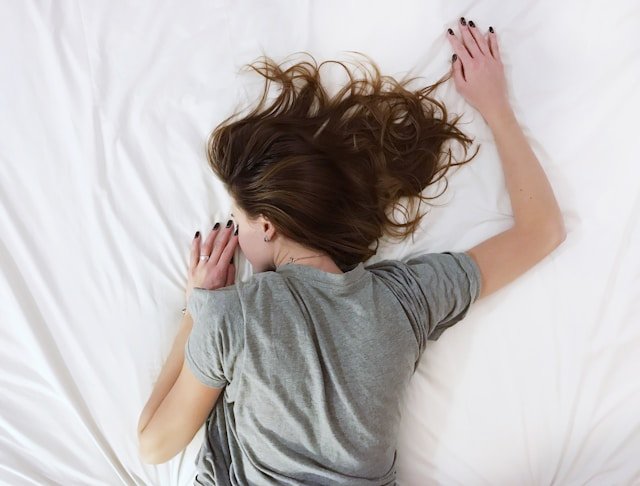
You’ve heard the phrase “beauty sleep” a thousand times — but beneath it lies real science.
While you sleep, your body isn’t idle; it’s rebuilding, rebalancing, and renewing.
And your hair follicles, like every other living cell, depend on this quiet nightly repair to grow strong and healthy. 🌙
1. Sleep: The Forgotten Hair Growth Factor
Most people focus on diet or products when they think about hair loss.
But sleep — often overlooked — is one of the most powerful tools for natural regrowth.
During deep rest, your body produces growth hormone (GH), restores circulation, and reduces cortisol, the stress hormone that contributes to shedding.
💡 Your scalp regenerates while you sleep — but only if you give it the chance.
2. The Science of Nighttime Repair
Each hair follicle contains its own biological clock, synchronized with your body’s circadian rhythm.
At night, this rhythm triggers:
- Increased cell renewal in the scalp
- Boosted collagen and keratin synthesis
- Regulation of melatonin, which also supports follicle activity
When sleep is interrupted or shortened, these repair signals weaken — leading to slower growth and a duller scalp tone.
3. Cortisol, Stress, and Hair Loss at Night
High nighttime cortisol levels prevent follicles from entering the active growth phase.
If you’re anxious, overworked, or sleep-deprived, your body stays in “alert mode,” delaying regrowth.
After childbirth, this effect is amplified — postpartum insomnia and anxiety can prolong shedding.
That’s why rebuilding sleep consistency is one of the most effective, drug-free ways to restore hormonal calm.
Read more: Postpartum Anxiety and Hair Shedding: Gentle Ways to Cope
4. How Deep Sleep Nourishes Your Scalp
When you enter slow-wave (deep) sleep, blood flow to muscles and skin increases.
This oxygen-rich circulation reaches your scalp, carrying nutrients and clearing waste products.
Better circulation = better follicle nourishment.
That’s why even 30 minutes less sleep per night can noticeably slow growth after several weeks.
💡 Think of sleep as your nightly nutrient delivery system.
5. Melatonin: The Sleep Hormone That Also Affects Hair
Melatonin doesn’t just regulate sleep — it also influences hair growth directly.
Follicles have melatonin receptors, and studies show it helps maintain a balanced growth cycle.
Natural ways to support melatonin include:
- Avoiding screens 1 hour before bed
- Keeping your room dark and cool
- Eating tryptophan-rich foods (almonds, oats, bananas)
6. Sleep Deprivation and the Scalp Barrier
Lack of sleep raises inflammation, weakens the scalp barrier, and increases oil oxidation — making the scalp more reactive and prone to flaking.
In other words, when your mind is tired, your scalp is, too.
💡 Good sleep acts like a natural anti-inflammatory serum from the inside out.
7. Gentle Nighttime Rituals for Better Rest
🌸 1. Warm Herbal Tea
Chamomile or passionflower tea lowers heart rate and prepares your nervous system for rest.
💆 2. Scalp Massage
Massage your scalp for 3–5 minutes before bed using light circular motions.
This calms the vagus nerve and promotes blood flow.
Read more: Mindful Massage: Relaxation That Nourishes Your Roots
🕯️ 3. Screen-Free Wind Down
Dim lights and play soft sounds or nature ambience for 15 minutes before sleep.
Let your mind slow down gradually, like sunset fading into night.
8. Sleep, Hormones, and Postpartum Recovery
For new mothers, interrupted sleep is nearly unavoidable — but short, intentional rest still helps.
Even 20-minute naps can lower cortisol and improve circulation.
Pair rest with nutrient support (iron, vitamin D, and omega-3s) to strengthen regrowth naturally.
👉 Gentle Postpartum Hair Recovery Guide
💡 Consistency matters more than duration — small pauses of peace rebuild balance.
9. Creating a Sleep-Friendly Environment
| Element | Tip | Why It Helps |
|---|---|---|
| Temperature | Keep 18–20°C | Boosts melatonin release |
| Lighting | Use warm lamps | Supports circadian signals |
| Scent | Try lavender or sandalwood | Calms heart rate |
| Fabric | Silk pillowcase | Reduces hair friction and breakage |
These small details help the body associate bedtime with restoration.
10. The Gentle Takeaway
Sleep isn’t a luxury — it’s a form of biological self-respect.
When you rest, your body quietly shifts into growth mode, reminding you that recovery and beauty are deeply connected.
“Every night’s rest is a small act of renewal — for your body, your scalp, and your spirit.” 🌿
References
Han, Y., & Park, S. (2022). Circadian rhythm and follicular repair: the role of sleep in hair regrowth. International Journal of Cosmetic Science, 44(3), 370–388.*
Lopez, C., & Kim, J. (2021). Sleep quality, cortisol regulation, and scalp health in postpartum women. Journal of Cosmetic Dermatology, 43(6), 530–548.*