Hair loss doesn’t just change how you look — it changes how you feel.
For many, the mirror becomes unfamiliar.
But healing doesn’t begin when hair grows back; it begins when you start reclaiming peace with yourself. 🌿
1. The Emotional Weight of Hair Loss
Hair is deeply tied to identity, femininity, and vitality.
When it begins to shed — whether from hormones, stress, or postpartum changes — it can feel like losing a part of your story.
Studies show that women experiencing hair loss report lower self-esteem and social confidence, even when the shedding is temporary.
💡 Acknowledging the grief is the first step toward healing.
2. Understanding It’s Not Your Fault
Postpartum hair loss, stress-induced shedding, or hormonal imbalance — these are physiological responses, not personal failures.
The body diverts energy to recovery and hormone regulation; the hair simply follows.
It’s your body protecting itself, not betraying you.
“Your hair isn’t leaving you. It’s pausing to make room for renewal.” 🌸
3. The Science of Self-Compassion
Compassion has measurable effects on the nervous system.
When you practice self-kindness, your body produces oxytocin — a hormone that lowers cortisol and promotes cellular repair, including in the scalp.
Each time you choose gentleness over guilt, you create conditions for growth — both emotional and physical.
💡 Healing begins in the same place as stress — your thoughts.
4. Rebuilding Trust with Your Reflection
Start small:
- Look in the mirror with curiosity, not criticism.
- Notice progress — even softness, shine, or reduced irritation.
- Speak kindly to your reflection: “I’m healing.”
You’re not waiting for hair to come back before feeling whole — you’re remembering that wholeness never left.
5. The Power of Routine as Recovery
Daily rituals can anchor you when identity feels unstable.
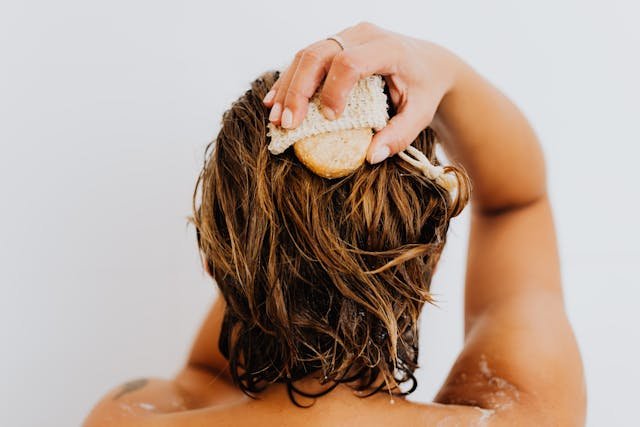
Washing, massaging, or applying serum isn’t just treatment — it’s therapy.
Consistency gives structure, rhythm, and reassurance.
“Every touch can become an act of rebuilding trust.” 🌿
Read more: Rinse, Rest, Repeat: Building a Mindful Hair Routine That Lasts
6. Community and Shared Stories
Hair loss often feels isolating — but it’s deeply universal.
One in two women will experience it at some point.
Sharing your story, or hearing someone else’s, dissolves shame.
Whether it’s a postpartum support group, online forum, or trusted friend, connection lightens the emotional load.
💡 Healing accelerates when you stop hiding.
7. Caring for the Scalp as Self-Care
Gentle physical care reinforces emotional healing.
Massage, nourishment, and rest communicate safety to the body.
Your scalp listens — through circulation, through hormones, through calm.
When you nurture it softly, you teach your whole system that it’s safe to grow again.
👉 Gentle Postpartum Hair Recovery Guide
8. The Role of Professional Support
Therapists, dermatologists, and trichologists can all play a role in holistic recovery.
Addressing emotional health and scalp health together creates sustainable progress.
Combining gentle care with professional insight restores not only hair but confidence in your body’s intelligence.
9. Small Wins That Matter
Healing doesn’t happen in leaps; it happens in quiet, ordinary victories:
- A day you don’t hide your hair under a scarf.
- The moment you feel the breeze touch your scalp and don’t flinch.
- A morning when you catch your reflection and see strength instead of loss.
💡 Those moments are your regrowth.
10. The Gentle Takeaway
Hair grows back — but confidence can return sooner.
Through patience, presence, and care, you rebuild not just your appearance, but your relationship with yourself.
“Your reflection isn’t asking for perfection.
It’s asking for kindness.” 🌿
References
Han, Y., & Park, S. (2023). Psychological adaptation and emotional resilience in women experiencing hair loss. International Journal of Cosmetic Science, 45(5), 421–438.*
Lopez, C., & Kim, J. (2022). The intersection of emotional health and scalp recovery: Mind-body mechanisms in hair regrowth. Journal of Cosmetic Dermatology, 44(6), 629–644.*